Presenting at the Eastern Evaluation Research Society Conference

I recently had the opportunity to present at the Eastern Evaluation Research Society’s annual conference, which took place from May 1, 2016 to May 3, 2016 this year.
EERS_logo_0

At the conference, I presented on two main topics:

1.The Importance of Implementing Data and Accountability Feedback Loops in Mission Driven Organizations.

hor logo DCPNI SMALL v1

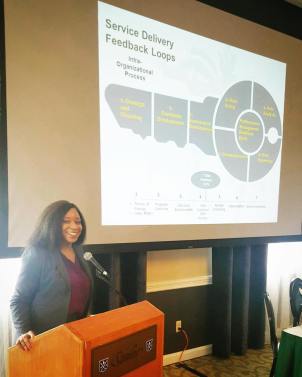
This presentation highlighted DCPNI’s Data and Accountability Feedback Loop to ensure program staff and external partners have the capacity to provide evidence-based, high-quality programming.

Whether you are a funder or leading data activities for your organization, receiving or providing performance feedback is not always easy. However, the information you receive can be essential to ensuring efforts are on track to meet organizational outcomes and priorities.

As a direct service provider and a grant-making organization, the mission of DC Promise Neighborhood Initiative is to end intergenerational poverty in Washington DC’s Kenilworth-Parkside community. To do this work, DCPNI funds local organizations to provide a range of services to residents with-in its geographic footprint.

Our use of a multi-faceted system for giving and receiving feedback helps position DCPNI and its partners to achieve results.

For the presentation, we explored the following topics: the use of on-going capacity assessment with staff and external partners; developing, implementing, and assessing a detailed strategic plan; monitoring performance; celebrating successes; taking corrective action; and using formative data strategies to identify results.

The presentation also highlighted how the funder-client feedback loop differs from the service-delivery feedback loop as it relates to reporting, performance monitoring, evaluation and compliance.
13116388_10154039252098726_3944444120194412784_o

Giving my first presentation at the EERS conference

2. Engaging and Equipping Community Residents for Action through Evaluation.

For this panel, we described the process of equipping residents with information to advocate for themselves. The goal of this project was related to that of the first presentation in that it involved the thoughtful engagement of community residents around key data points; however, it differed in its intention. Rather than using community interpretations to inform DCPNI’s strategic decisions (e.g., recruitment of providers, expansion/reduction of services), this approach empowered the community to act directly by using data generated by the community. The presentation related to the conference theme of “building knowledge,” as it explores DCPNI’s approach to sharing relevant information with residents and fostering community-driven change.

At the conference, my colleagues and I highlighted DCPNI’s approach to providing Community Action Teams with actionable data points and other sources of information to catalyze collective advocacy. The presentation will highlight the importance of identifying community champions; communicating findings in understandable ways; bridging barriers between residents and institutions; and maintaining momentum. It also tied in themes from the first presentation (e.g., balancing assets with deficits, respecting unique cultural perspectives/approaches).

Finally, we shared findings from multiple Community Action Team efforts, including a successful petition to the transportation authority to maintain an essential community bus route that had been slated for discontinuation. The audience participated by sharing their experiences and considering implications for place-based mission sustainability through community empowerment.
eers2

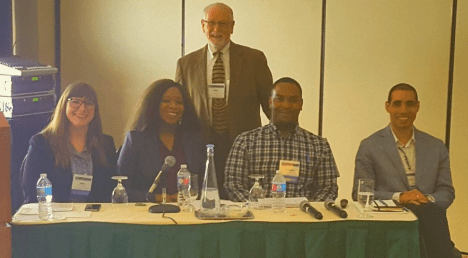
DCPNI Data and Evaluation Team with panel moderator – Villanova Professor John Kelley
My First Publication!!

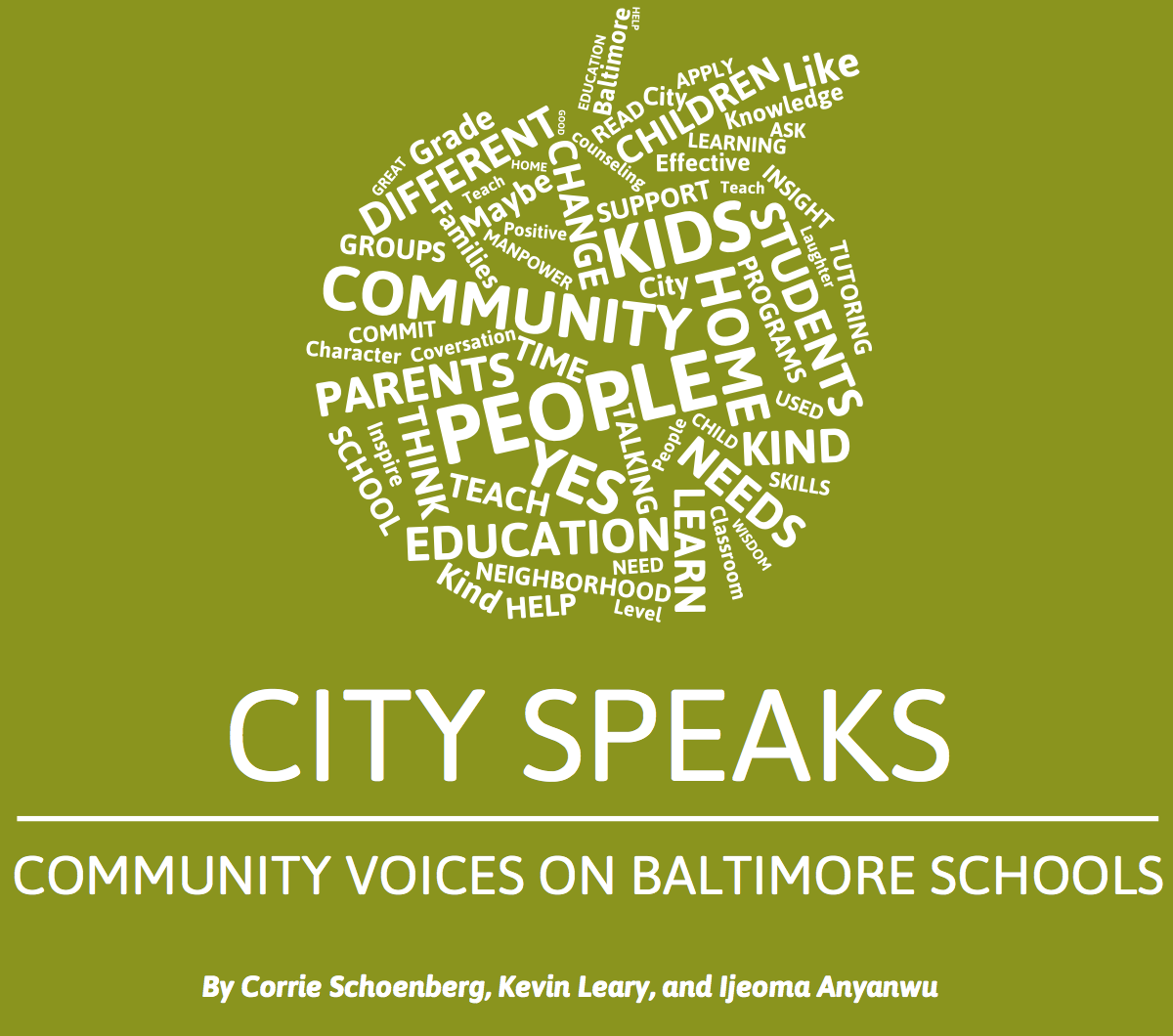
City Speaks: Community Voices on Baltimore Schools

A report, I co-authored, culminating my Education Pioneers fellowship experience as Chief Analyst and Manager of Data and Information Systems for The Fund for Educational Excellence was released today, on October 15, 2014.

Screen Shot 2014-10-15 at 12.08.31 PM

http://cityspeaks.ffee.org/ffee-study-results.pdf

In this report, 4 recommendations to the Baltiomore City Schools CEO were drawn from a year long community study conducted in all Community Statistical Areas (CSA’s) in Baltimore City.

From the conversations with Baltimore residents, the recommendations are as follows:

1. Create more welcoming school environments. Making a district-wide cultural shift to more open, responsive interactions with families and community members is a prerequisite for addressing many of the other concerns participants identified.
2. Leverage the tools at your disposal to reward, retain, and develop teachers.
3. Develop a comprehensive set of college and career readiness benchmarks and report out to individual students and families where students are performing
against these benchmarks.
4. Offer a wider variety of courses during school and more after-school activities for students.

The Fund will brief a number of groups on the findings from this study, including Dr. Thornton’s cabinet, the City
Schools Board of Commissioners, and Baltimore City’s delegation to the State legislature.

For a full list of top 10 themes and Baltimore citizen suggestions refer to 9 and 10 of report.

Find the neighborhood level reports and interactive maps at:

http://cityspeaks.ffee.org/

It truly was an amazing experience working on the Community Study with my colleagues at The Fund for Educational Excellence. I hope these recommendations and community suggestions will be utilized to effect change and improve the academic and life outcomes of the students in Baltimore City Schools.

Image

First Day as A Fellow

20140609_085448

Today was my first day as an Education Pioneer Fellow for the Fund for Educational Excellence!!

As the only local public education fund in Baltimore, The Fund is house to 3 main divisions:

 -District fundraising/development

 -District Innovation

 -Analysis and Engagement

The Analysis and Engagement division of The Fund, the division I’m primarily involved with, spearheaded a number of initiatives in partnership with Baltimore City Public Schools over these past few years. They are as follows:

1. The Fund aims to initiate programs that will decrease the amount of time students spend in high school. The goal is to identify at-risk youth who could stand to benefit from obtaining their degree under 4 years, At risk youth was operationally defined as over-age & under-credited students.

 – Some questions I have regarding this intervention is, at what grade and age will this intervention begin? What are the barriers to student participation in this project? Can it be related to the reasons why the students are currently at-risk for dropping out (i.e. External factors such as familial issues, poverty, neighborhood violence, etc.)? If so, how does this initiative plan to overcome this issue?

2. Another initiative by The Fund includes leveraging community resources to encourage students in areas of chronic absenteeism to attend schools. After a meeting with one of the program managers, I realized that this intervention had already been implemented, wrapped up, & completed. I will be meeting face to face with the director of this initiative on Wednesday and I hope to gain more insight of the programs successes and failures.

Until then I have made a list of some questions that came to mind,

  -How were volunteers selected? What was is it about the messages these volunteers left with parents and students that was supposed to ingnite interest in students and motivate them to attend school? Is the immediate effect, if any, sustainable after the intervention (without the calls from local volunteers)? Any efforts to investivate longitudinal effects of the program?

3. The third initiative, which I believe falls under both the A & E and Innovations Division is about School Choice within the Baltimore City Public School System. providing technical support for charters and traditional public city schools involved in the school choice program for Baltimore families.

After a staff meeting today, I was told that this initiative is comming to  an end and the the Charter School Coalition will be taking over as the manager of this project will be moving on to a position in the federal department of education (I need to keep her as a contact, as I hope to work for them one day!).

-And ofcourse I do have questions, first being the fact that I need to learn more about the program. What sort of technical assistance was provided to these school partners? And what about the program was so inticing to the Charter School Coalition?-Was it due to the success and efficiency of the initiative?

4. The fourth, and I think, second to largest project currently under way (after the Community project-to be described in detail in my next blog post), is the 21st Century Building plan. This initiative hopes to upgrade school buildings to help foster a more positive learning environment for the students. DC recently upgraded and renovated school buildings (mostly high school) within the district and I think this is a worthwhile project for City Schools to invest in.

In conclusion, my first day was AMAZING! I realized just how much The Fund actually does for Baltimore City, and I am excited to be a part of such an impactful organization. I look forward to the rest of my time with The Fund as an Ed Pioneer Fellow!